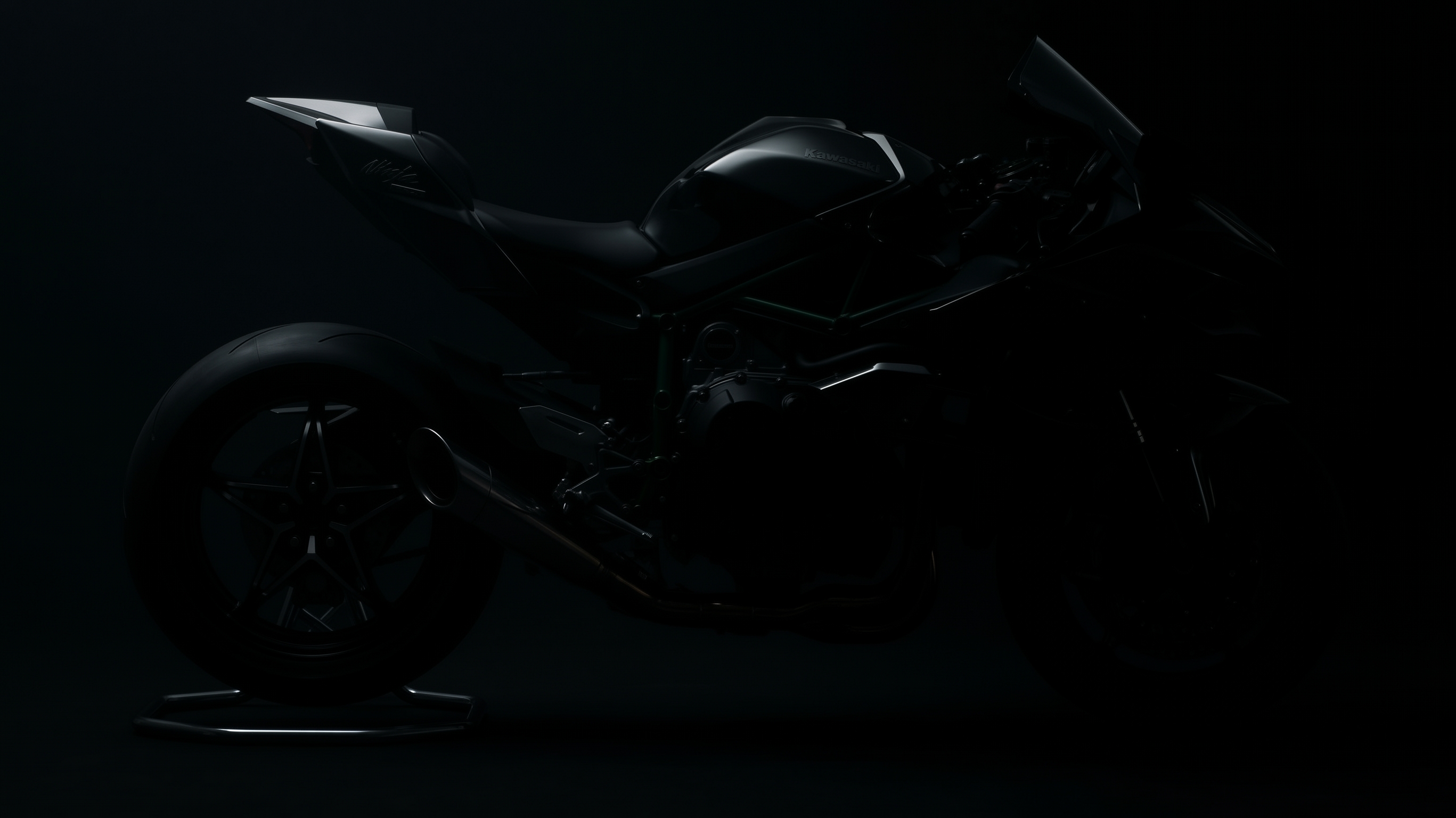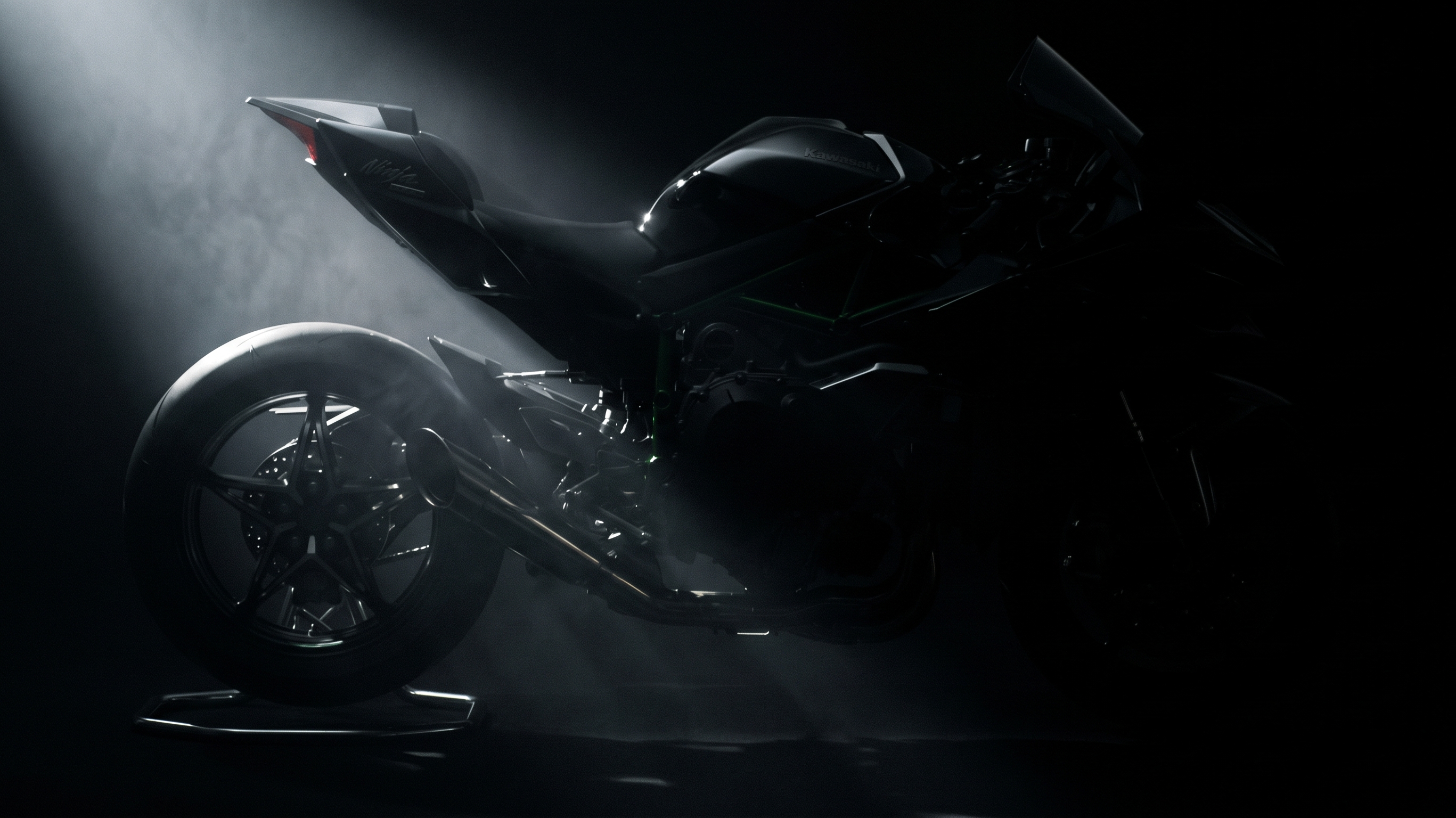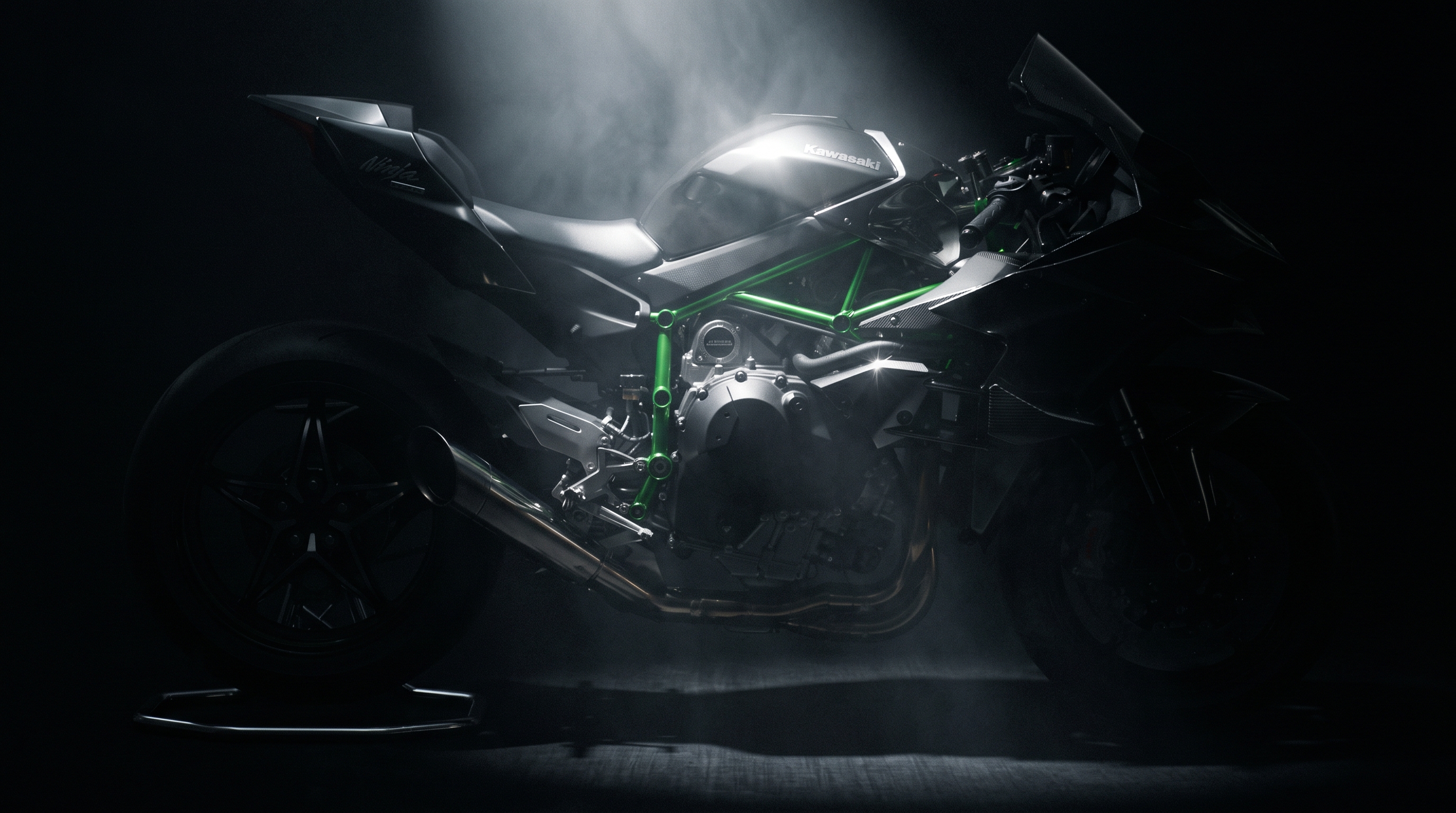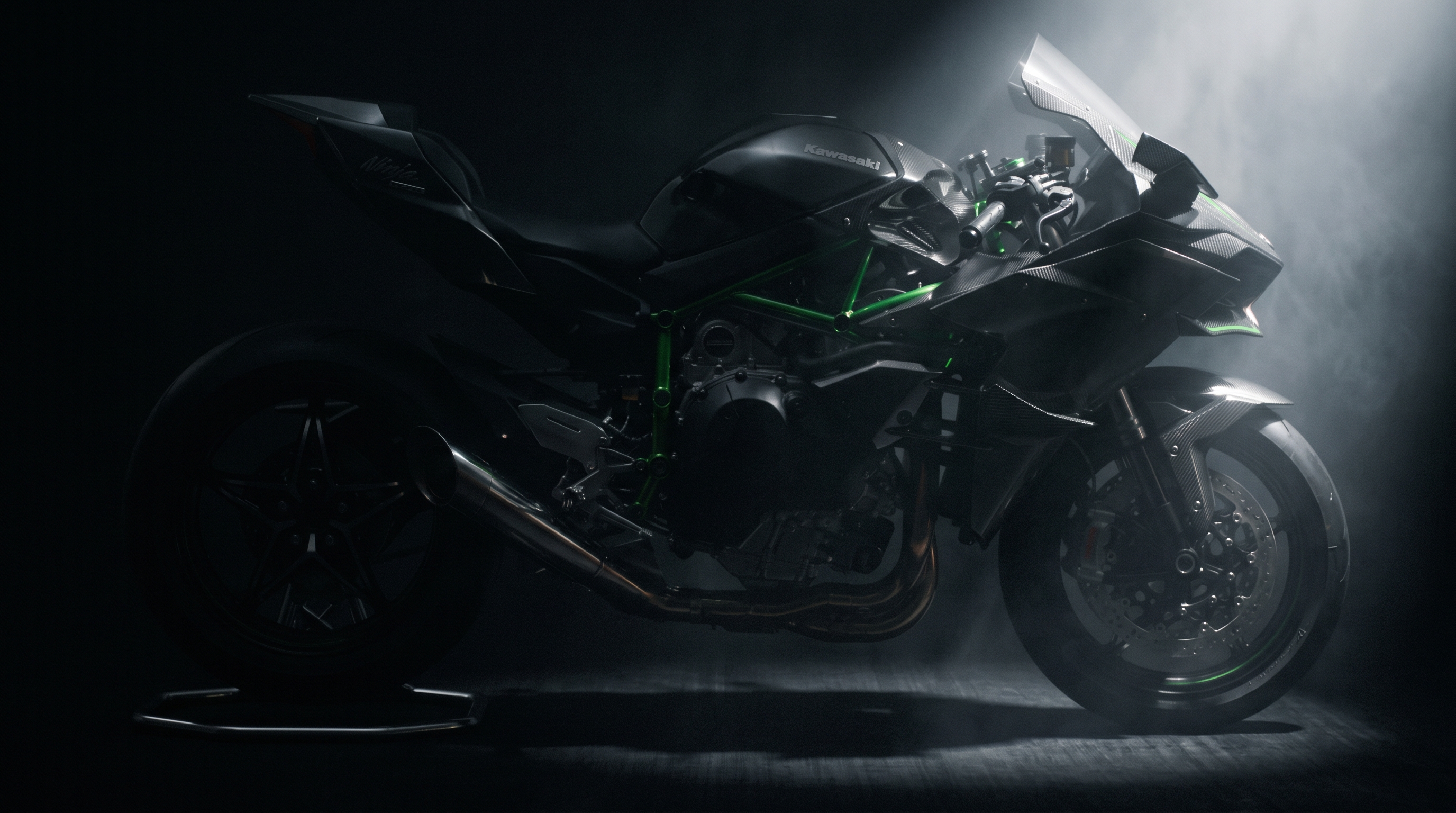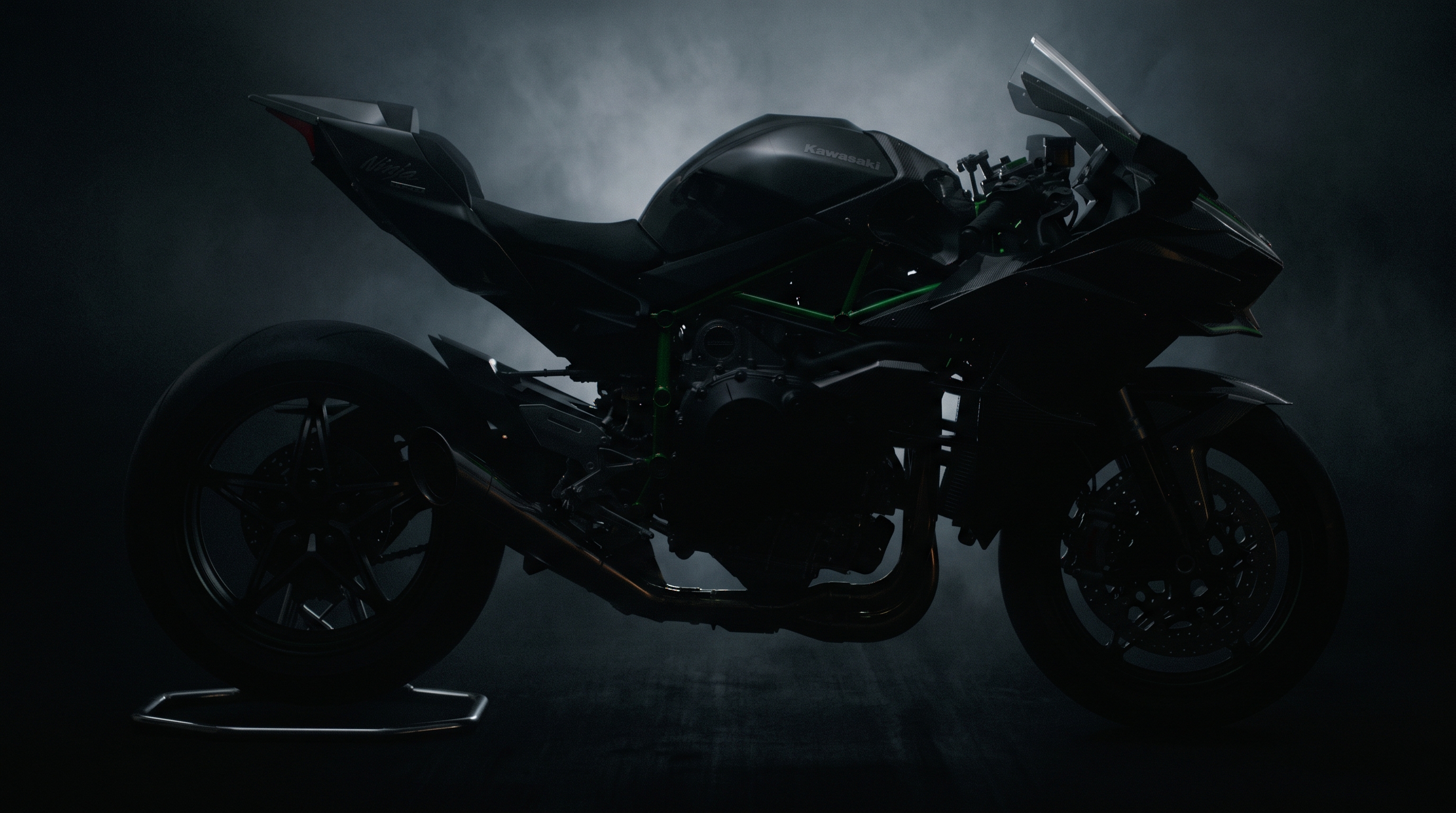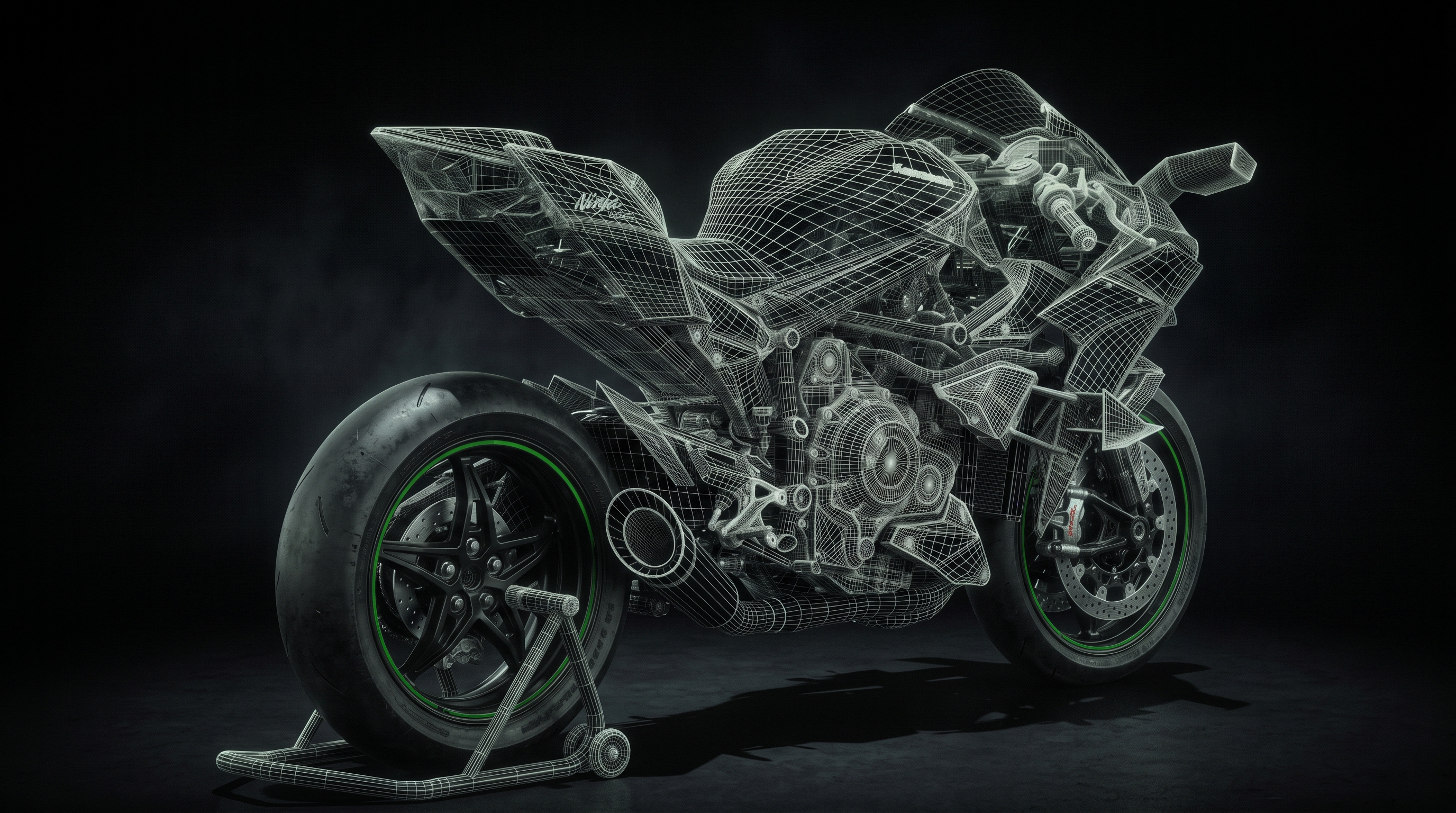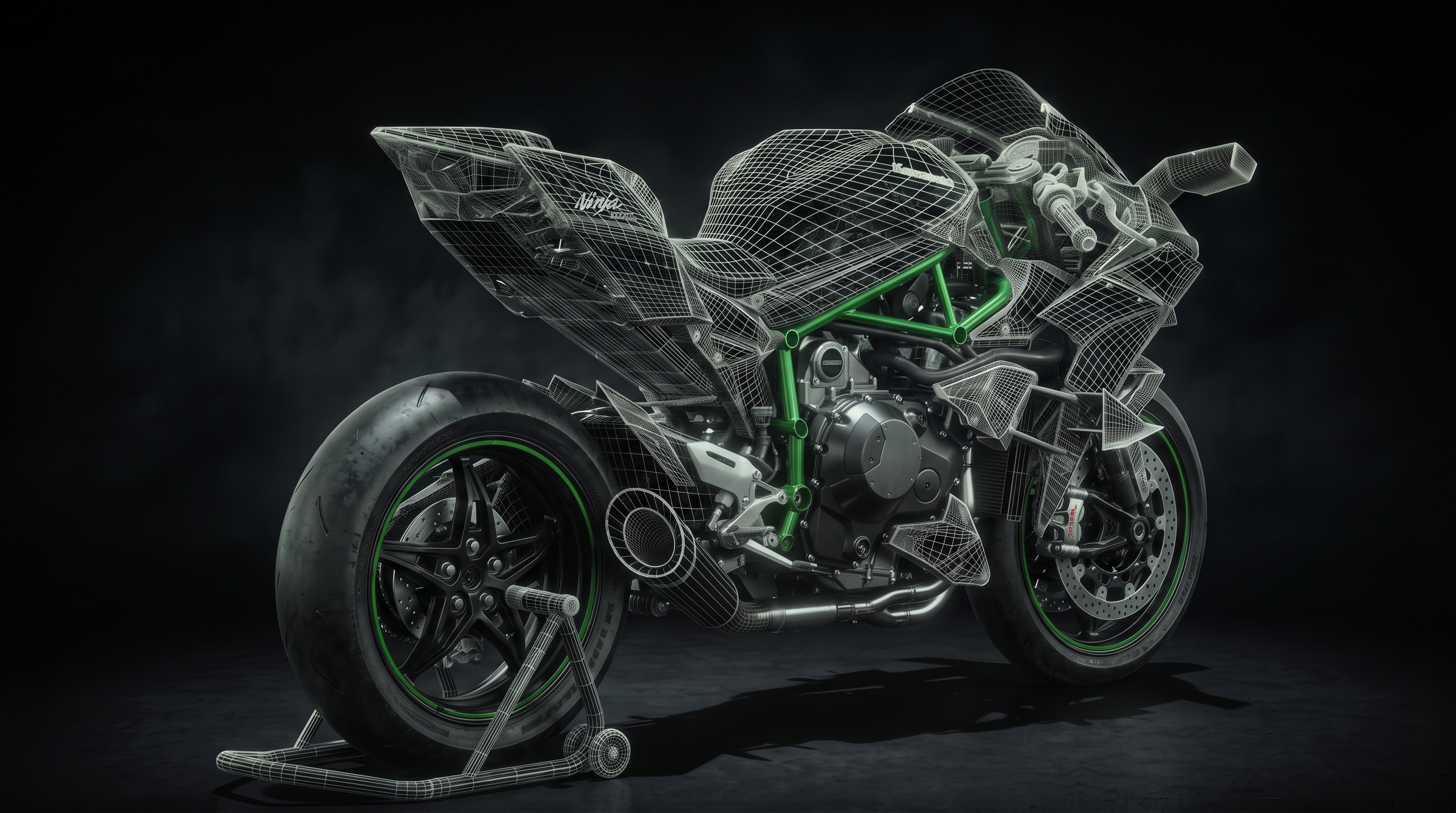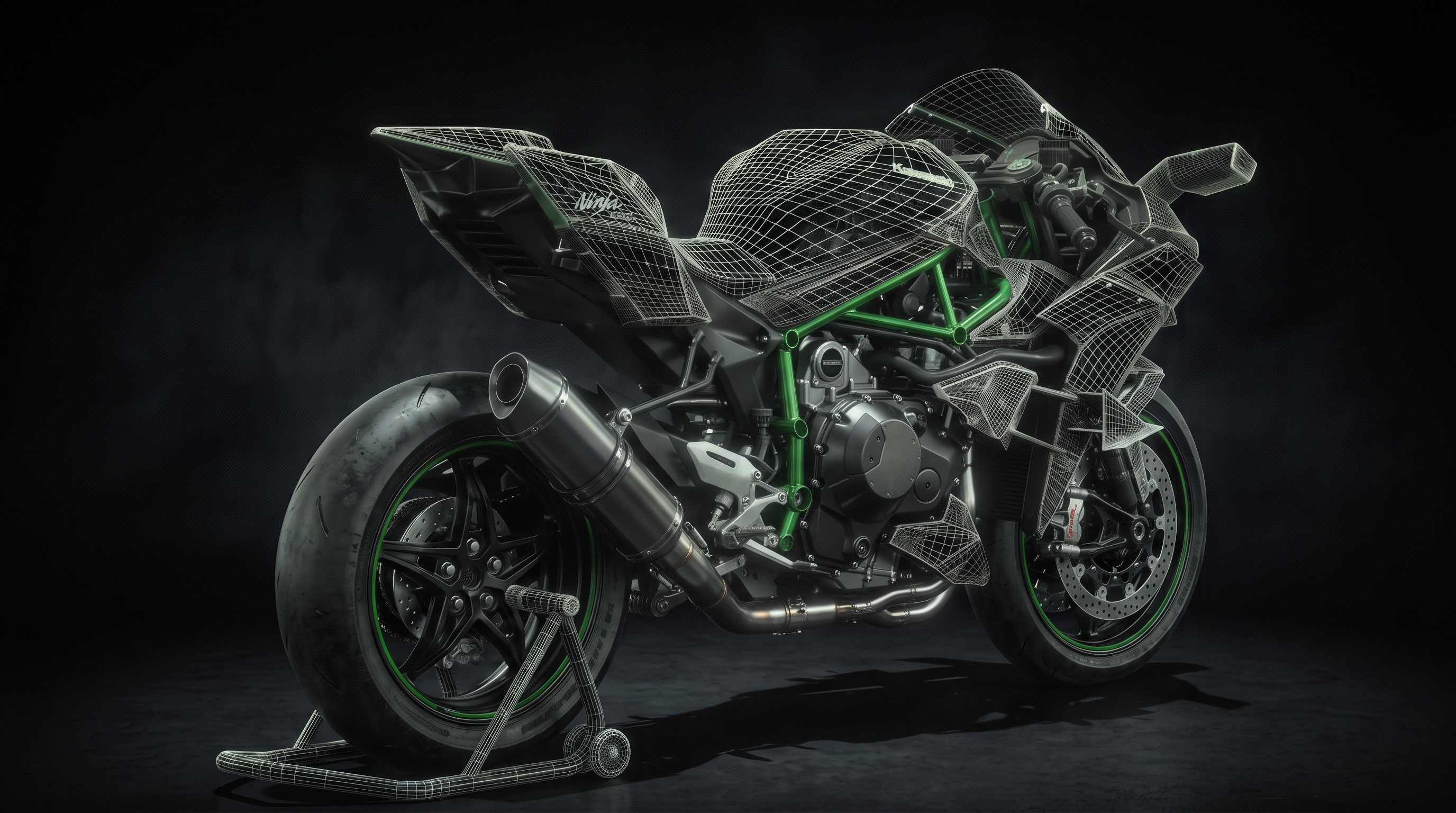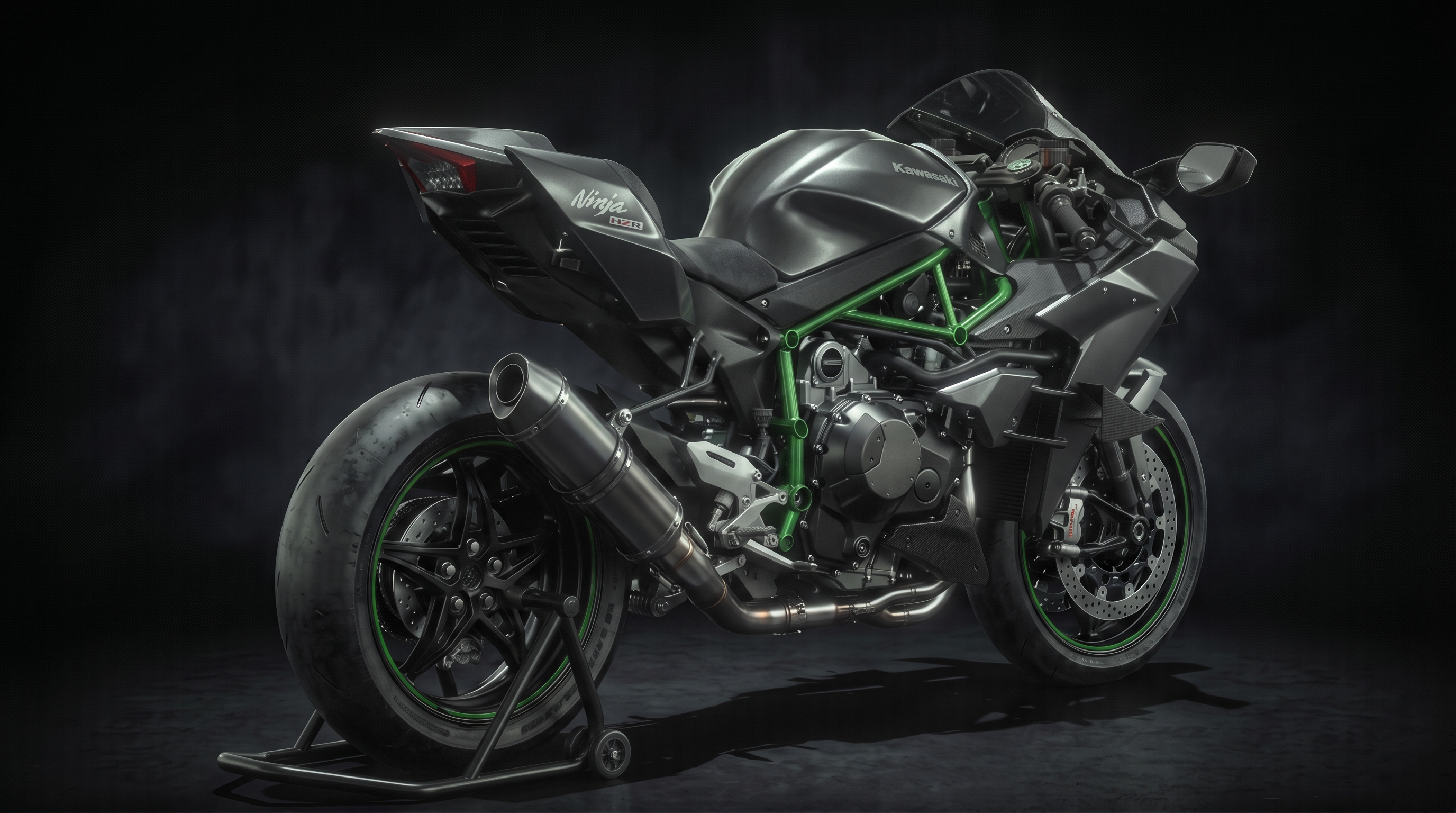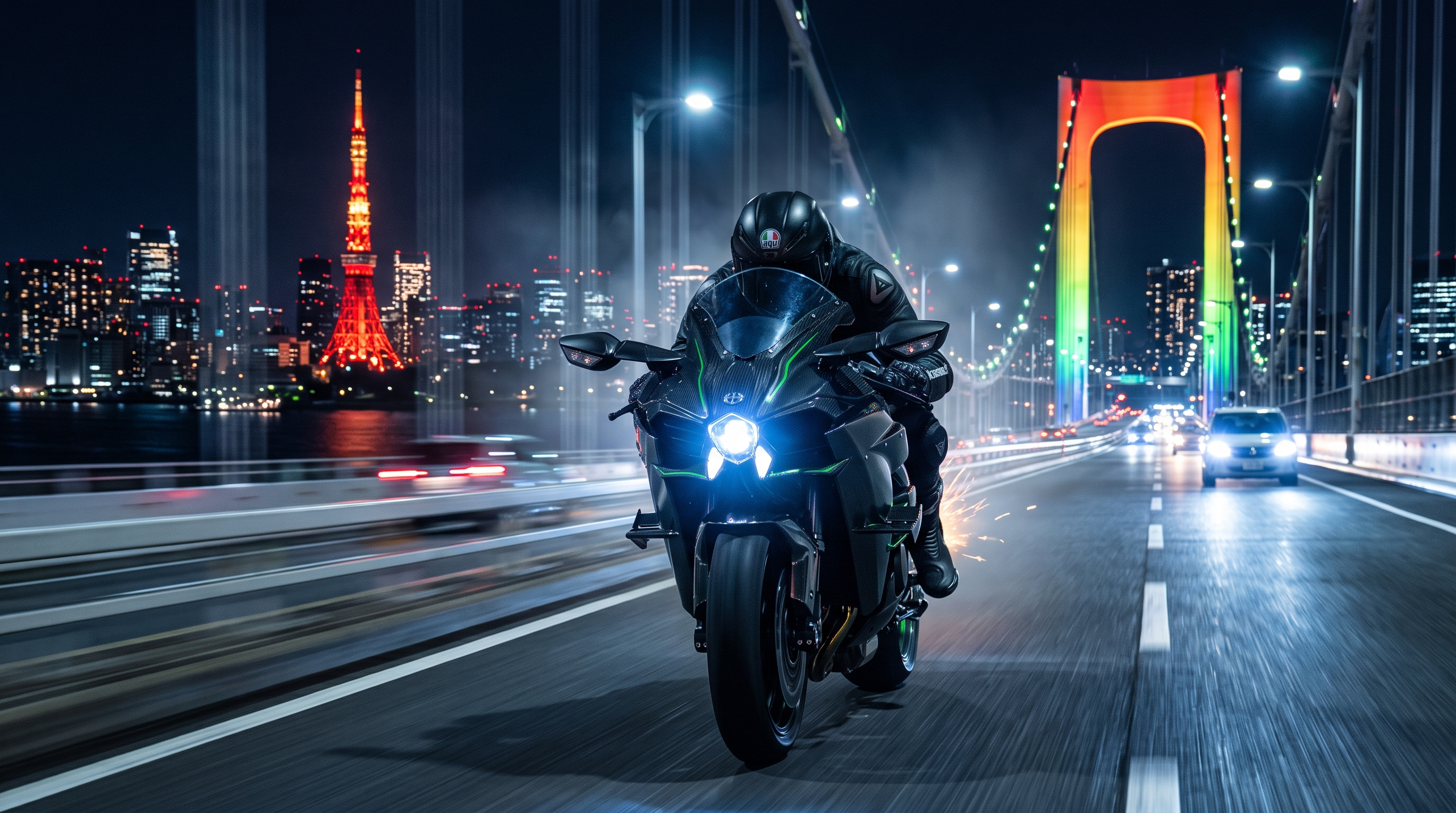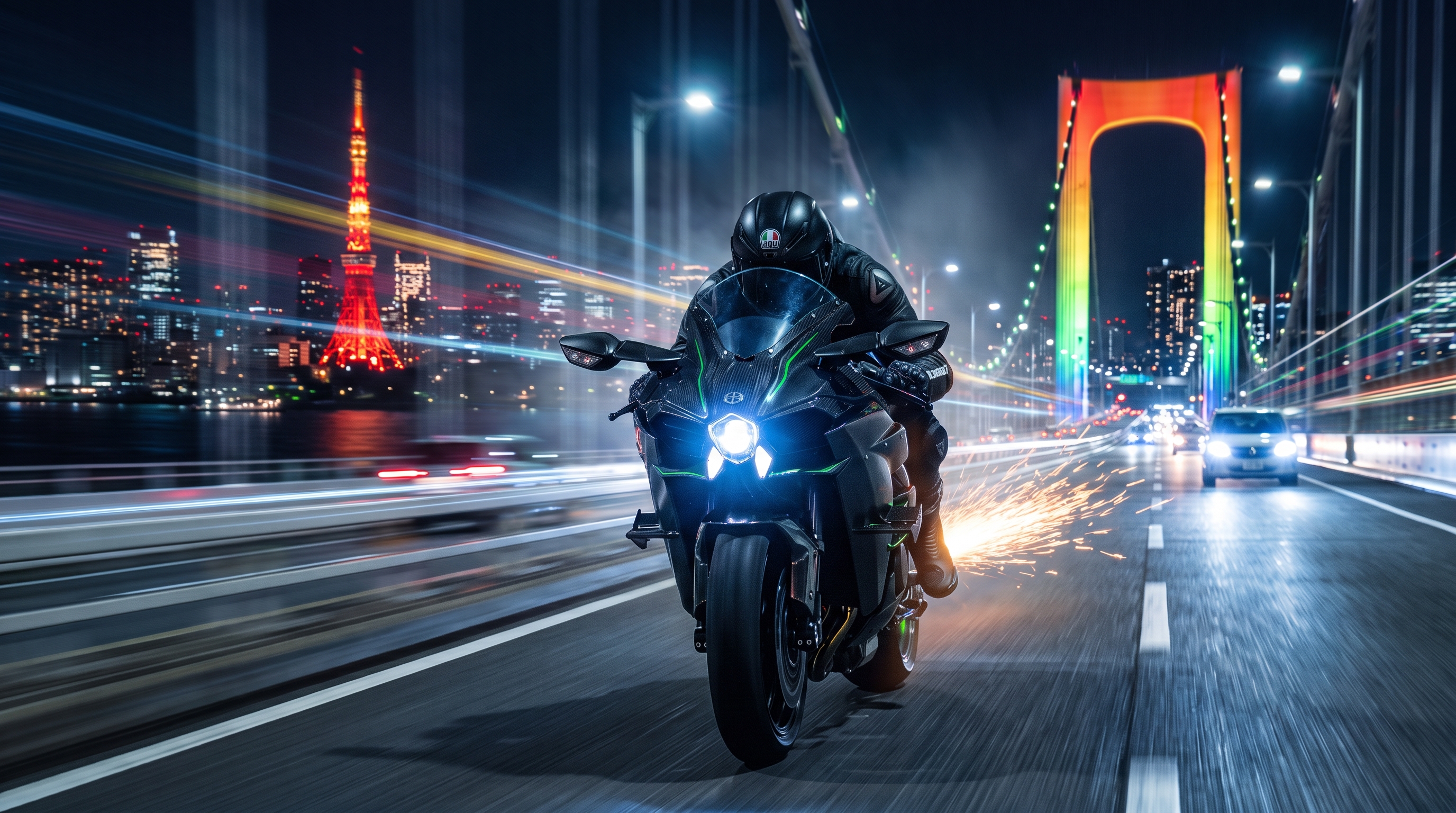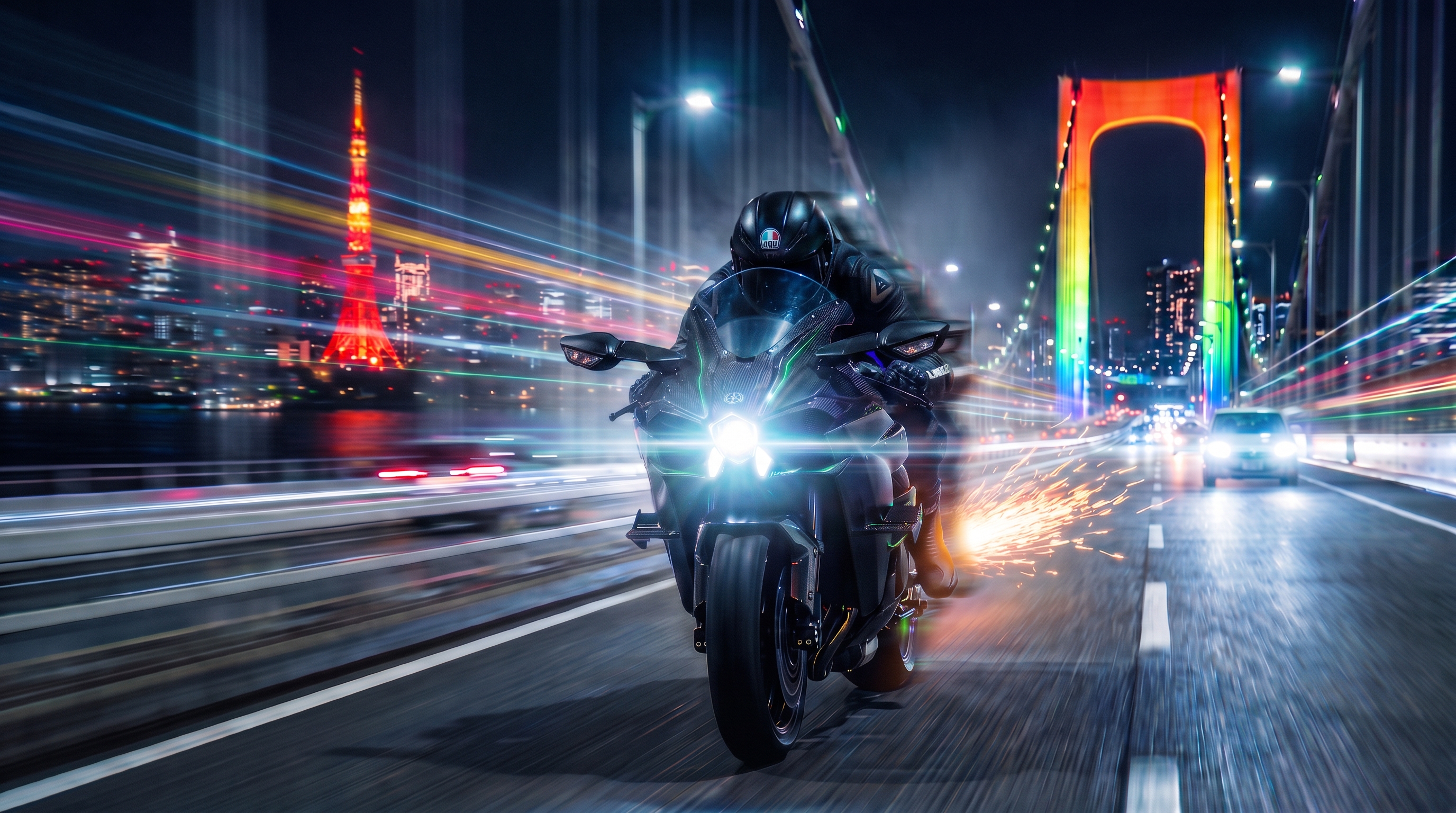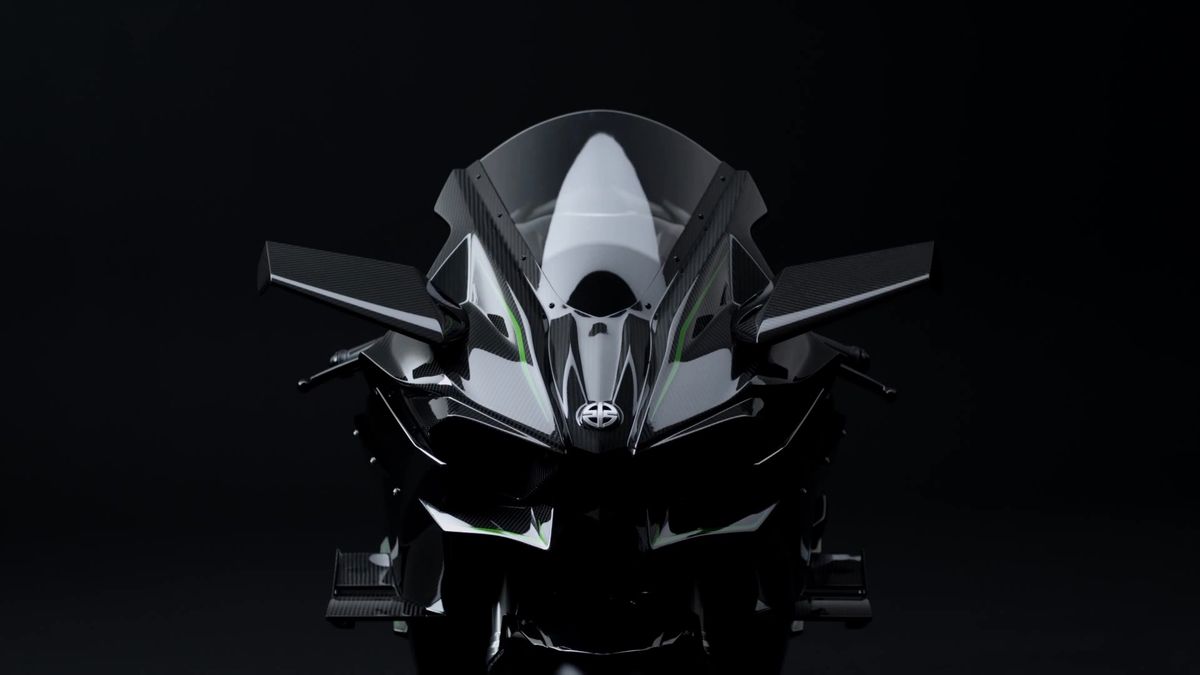
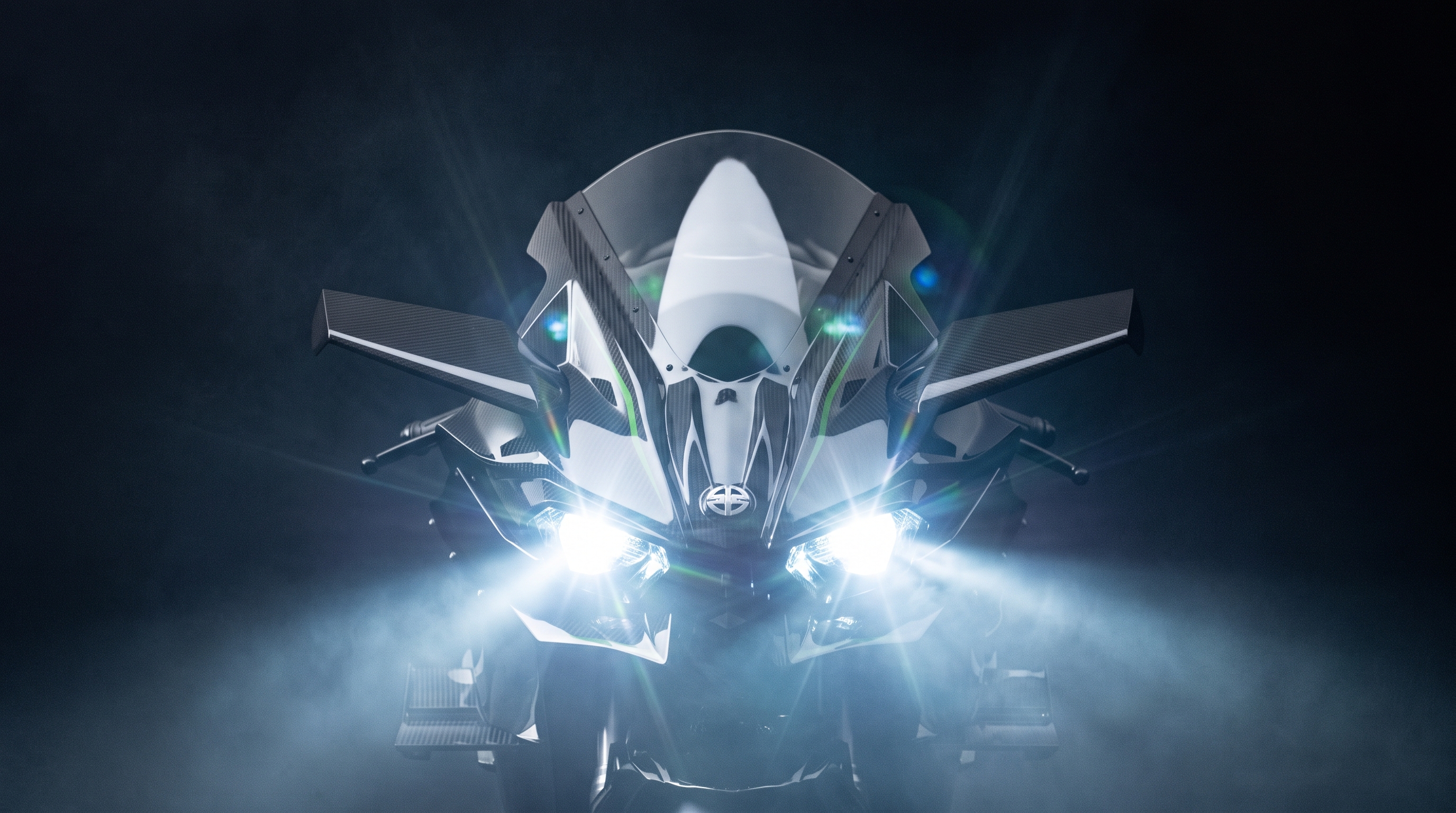
Kawasaki H2R with lights off Kawasaki H2R with lights on

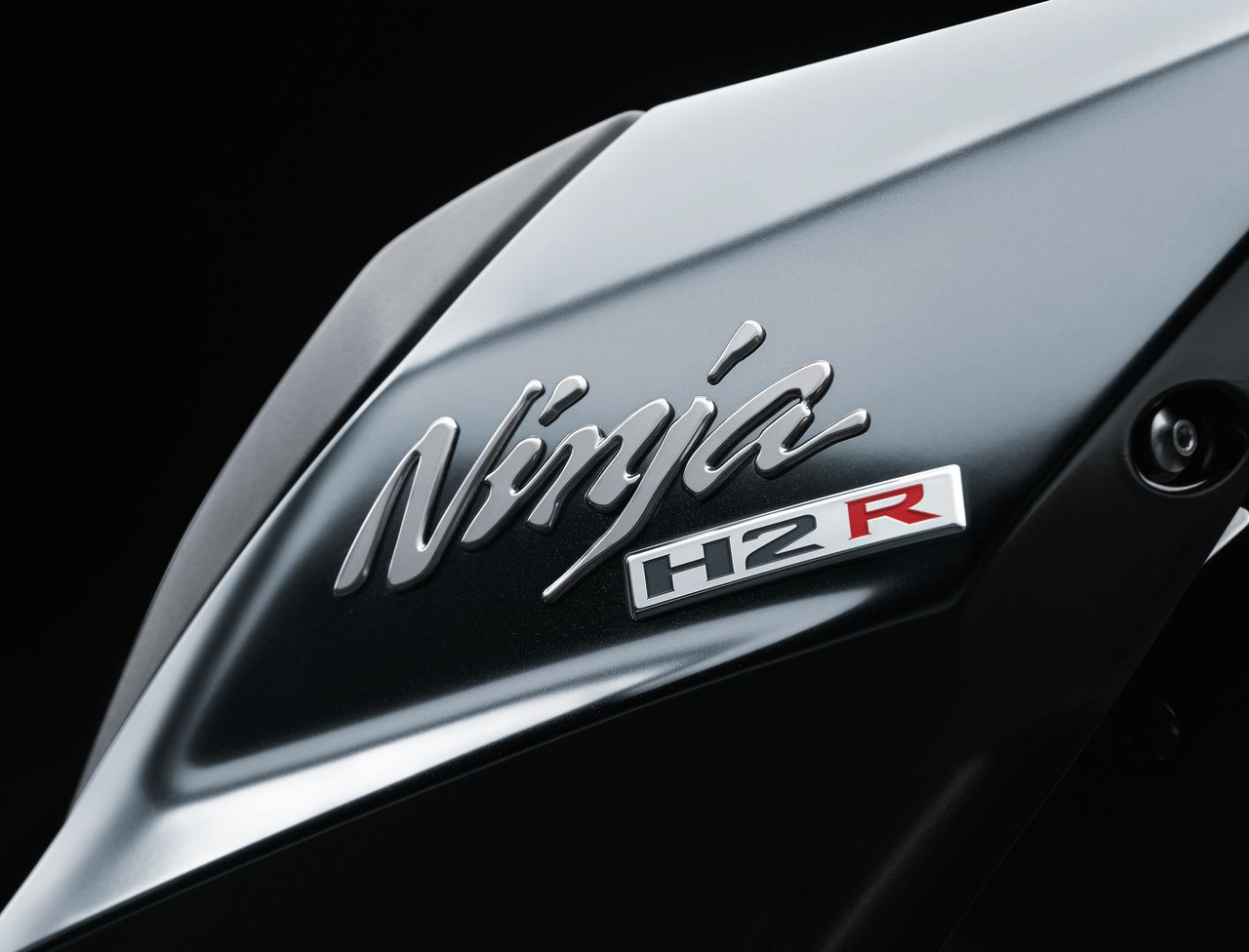
Ninja H2R

BUILT BEYOND BELIEF

Scroll down to switch on the headlights

UNDER THE SKIN

NINE COMPONENTS

The hardware behind 310 PS, 165 Nm and 998 cm³.

assets/images/components/supercharger.png

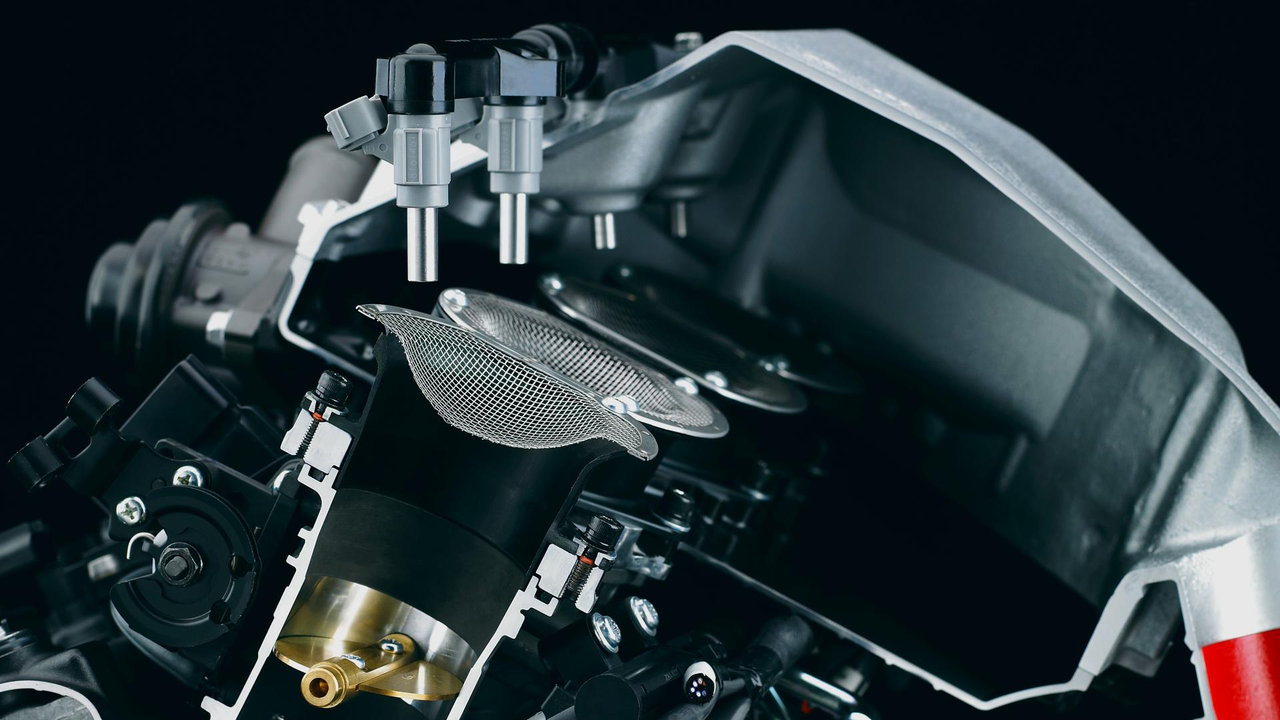
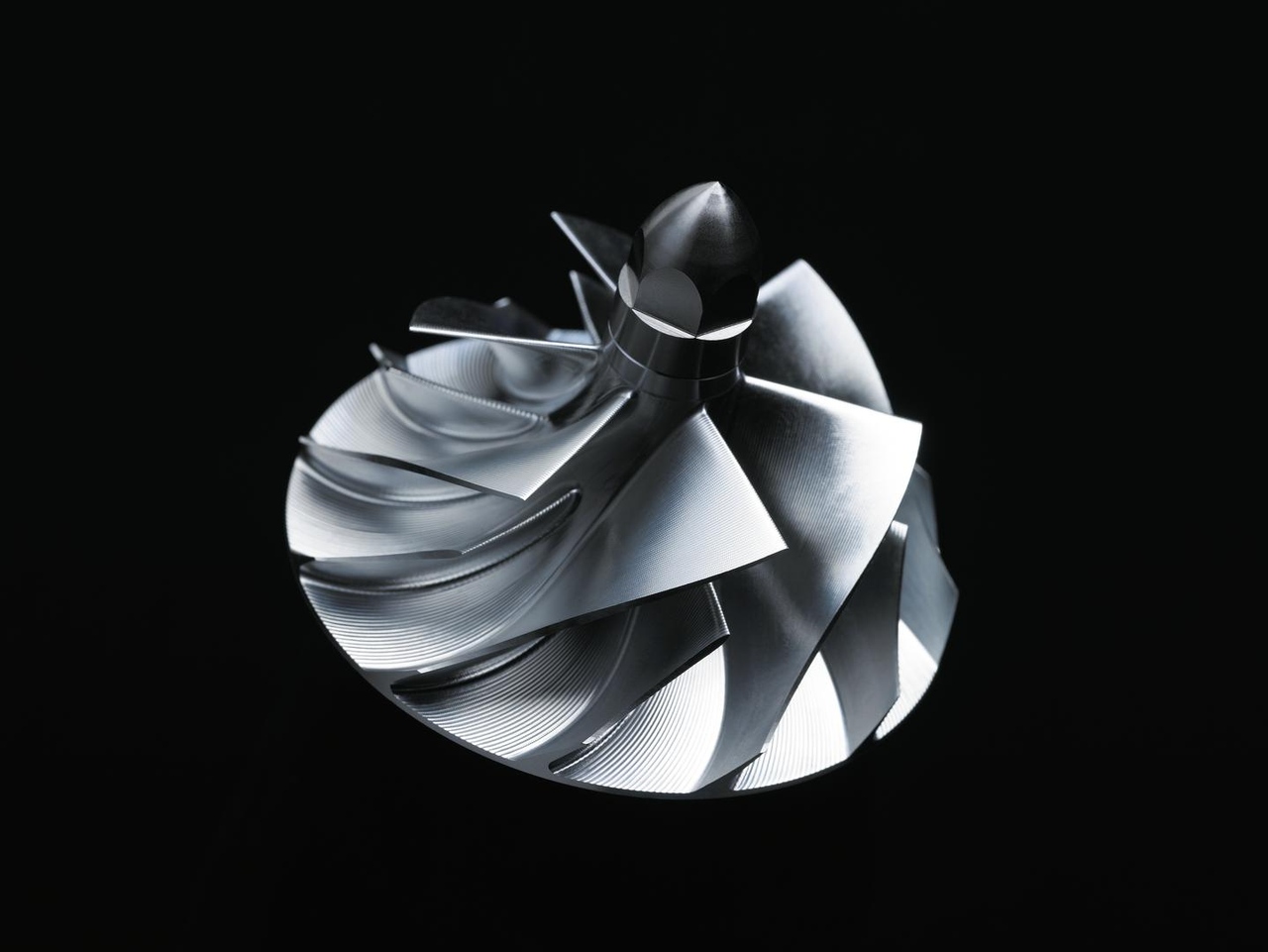
Kawasaki-developed supercharger impeller

Developed in-house by Kawasaki with the Gas Turbine, Aerospace and Corporate Technology divisions of KHI. A motorcycle-specific unit whose efficiency holds across a very wide operating range — impossible to reach by adapting an automotive supercharger. Less heat from compression means no intercooler, cutting weight and packaging the engine tighter.
assets/images/components/shockabsorver.png

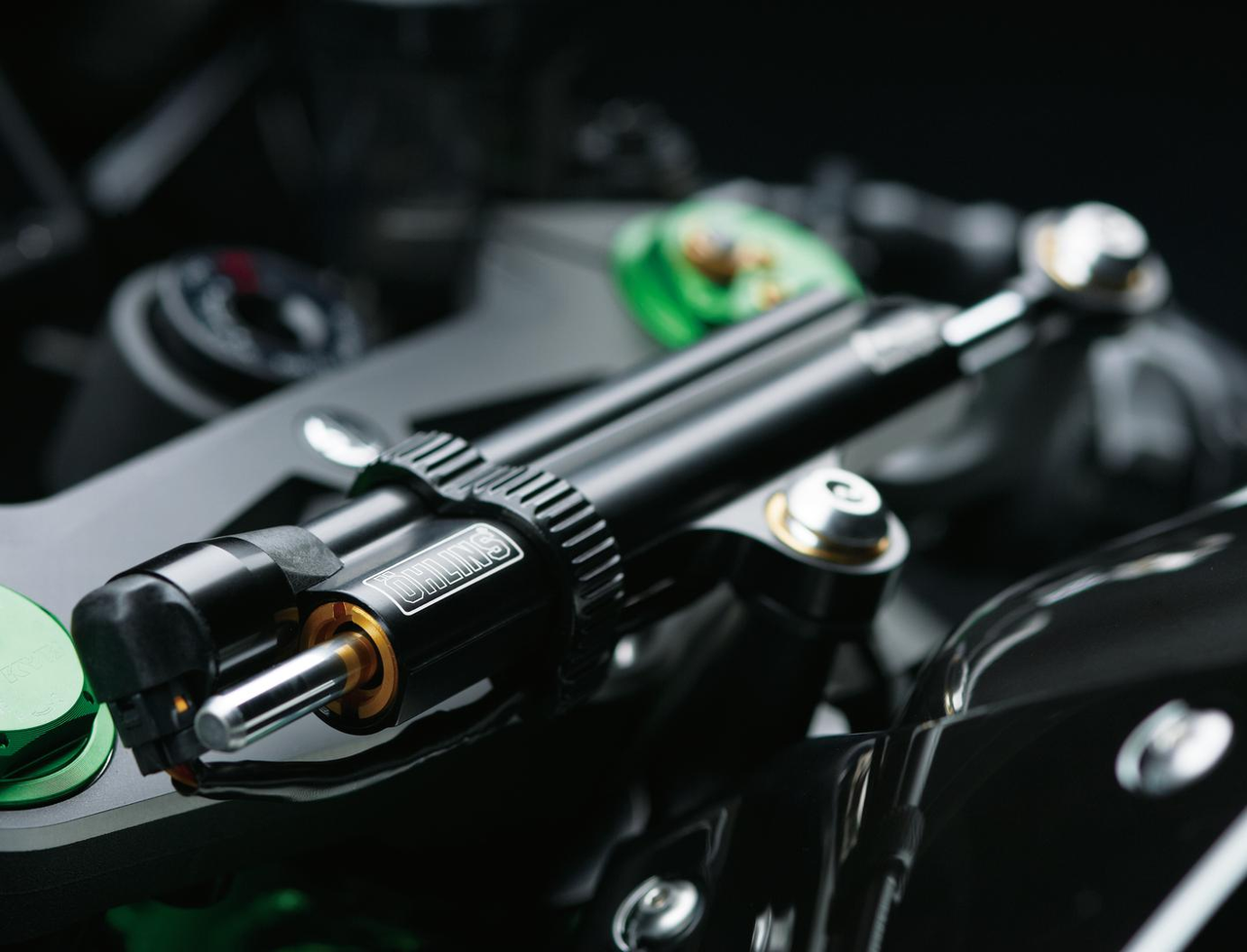
Ohlins TTX36 rear shock

Öhlins TTX36 piggyback shock on Uni-Trak linkage, with adjustable compression, rebound and preload.

assets/images/components/painting.png

Kawasaki Silver-mirror paint finish

A self-repairing coating restores small scratches by itself: soft and hard segments act as a chemical spring, absorbing impacts. Every stage from primer to final clear coat is applied by hand.

brakes.png

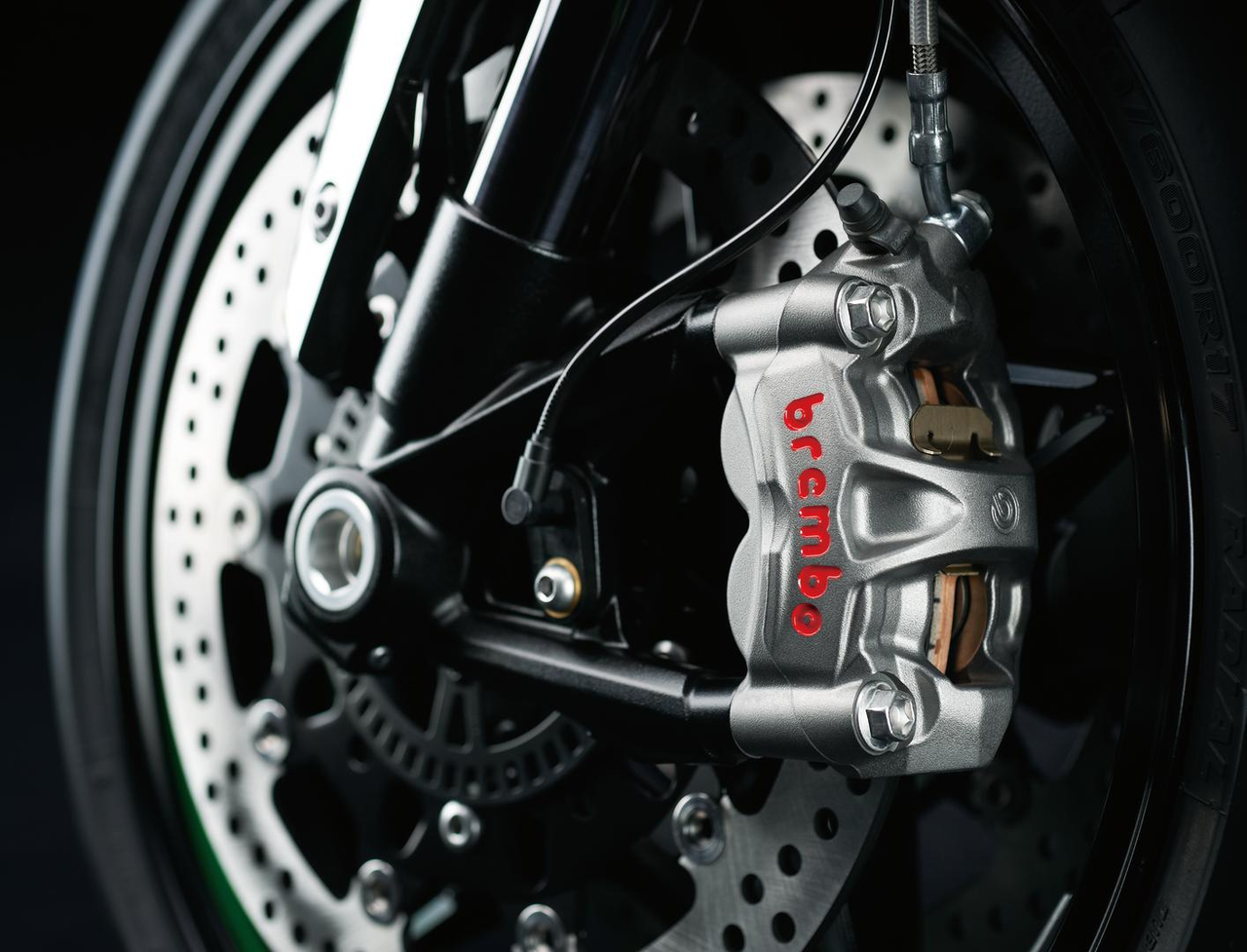
Brembo semi-floating brake discs

Huge semi-floating Brembo discs, Ø330 mm and 5.5 mm thick, with radial-mount Stylema monoblock calipers. Single Ø250 mm disc at the rear.

assets/images/components/chasis.png

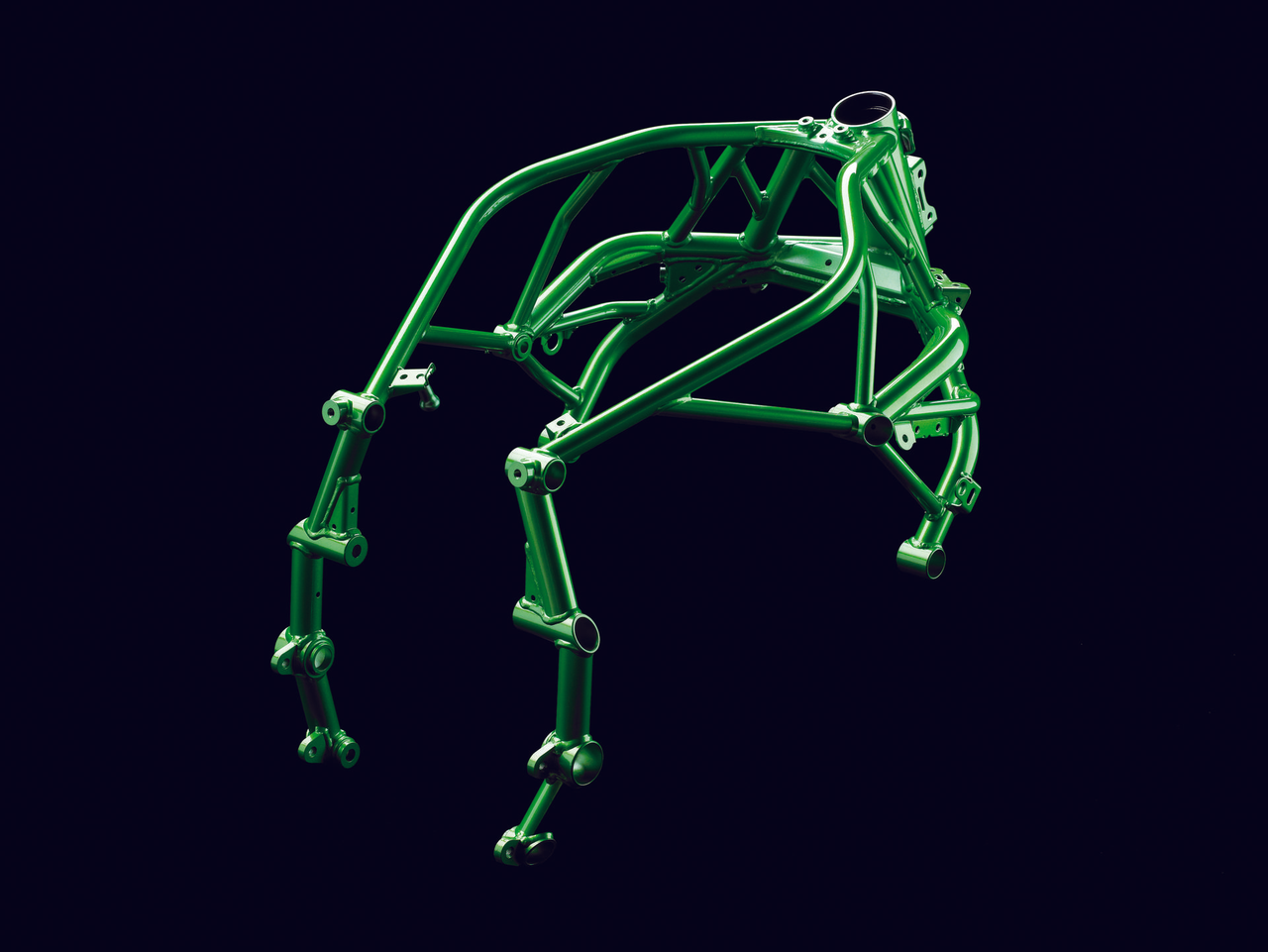
Multitubular chassis frame

A high-tensile steel multitubular frame — lightweight and elegant, yet able to meet the performance the chassis demands. 25.1° rake, 108 mm trail.

assets/images/components/air.png

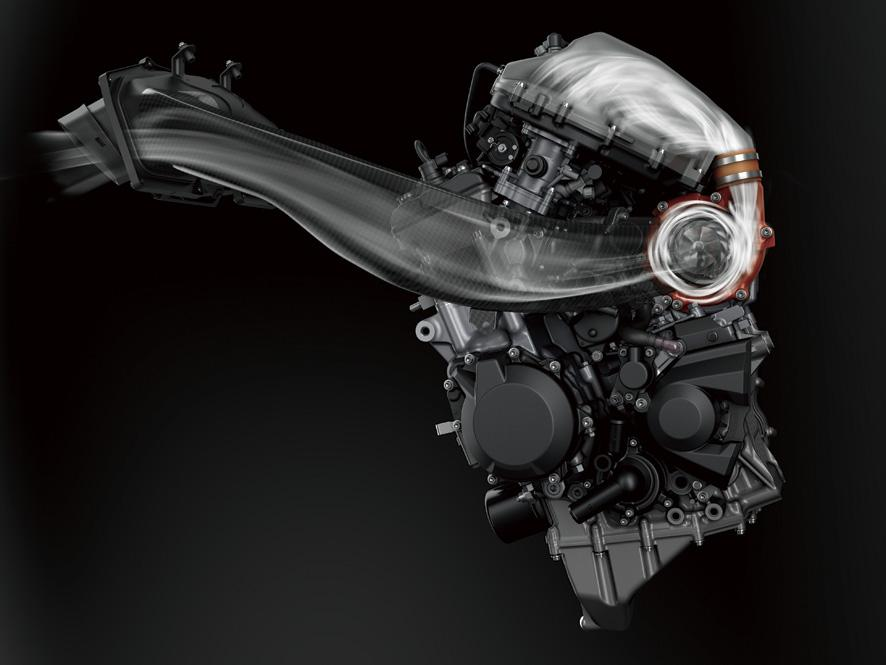
Twin Ram Air intakes in the upper fairing

Two Ram Air intakes at the top of the fairing feed the supercharger. Their combined frontal area is roughly 13,000 mm² — the volume of air needed for over 300 CV.

assets/images/components/motor.png

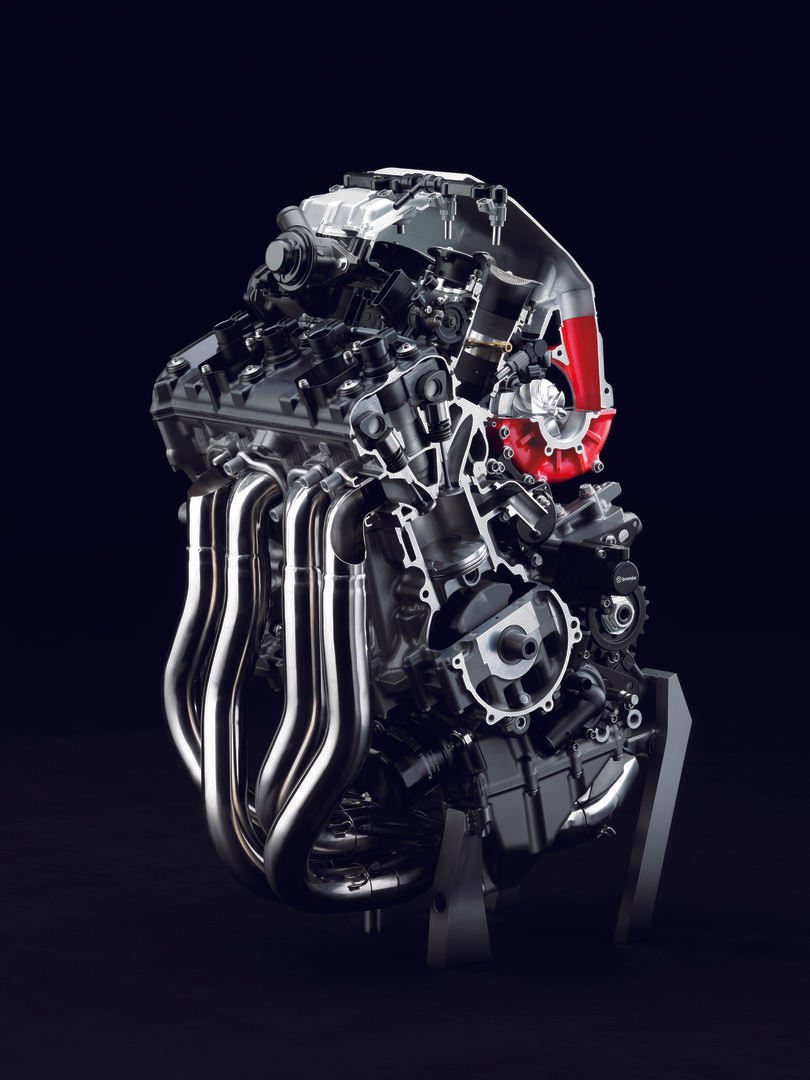
Ninja H2R inline-four engine

Beyond the familiar inline-four, the engine carries technology developed specifically for this supercharged unit — new solutions combined with Kawasaki Group know-how. 998 cm³, DOHC 16 valves, 76.0 × 55.0 mm, 8.3:1 compression.

assets/images/components/shifter.png

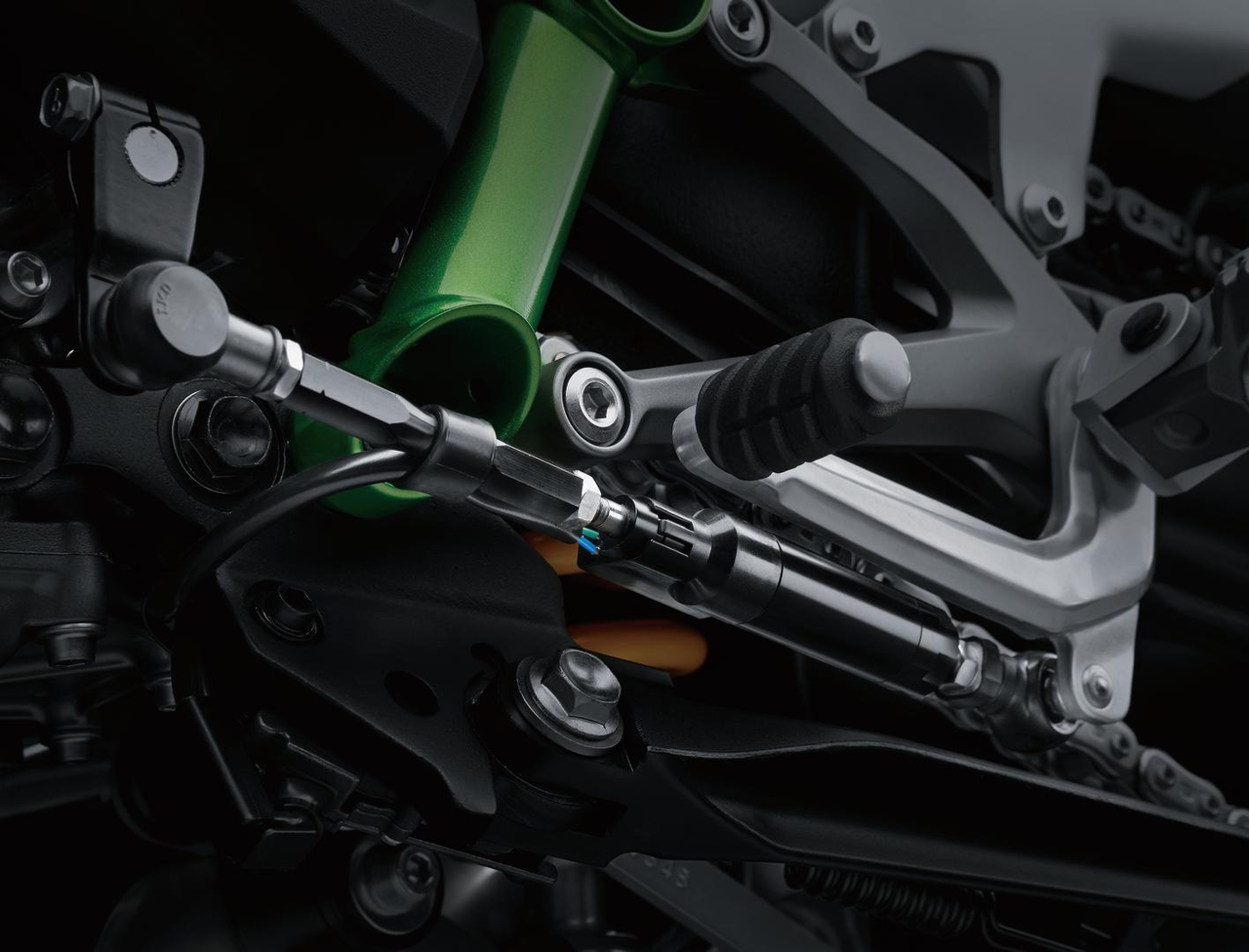
Dog-ring type transmission

Dog-ring transmission, as used in MotoGP and Formula 1, developed with Kawasaki Racing Team feedback.

assets/images/components/acceleration.png

KLCM launch control

KLCM manages power delivery off the line to prevent wheel slip. Three modes, all launchable at full throttle.

H2R in the dark H2R rear H2R center H2R front H2R silhouette
00 / IGNITION

NINJA H2R IN THE SHADOWS

01 / TAIL & EXHAUST

AERODYNAMIC DESIGN

02 / TRELLIS FRAME

SUPERCHARGED FRAME & ENGINE

03 / CARBON WINGS

EXTREME AERODYNAMIC DOWNFORCE

04 / SILHOUETTE

THE SHAPE OF SPEED

05 / POWER ON

THE NINJA WAKES UP

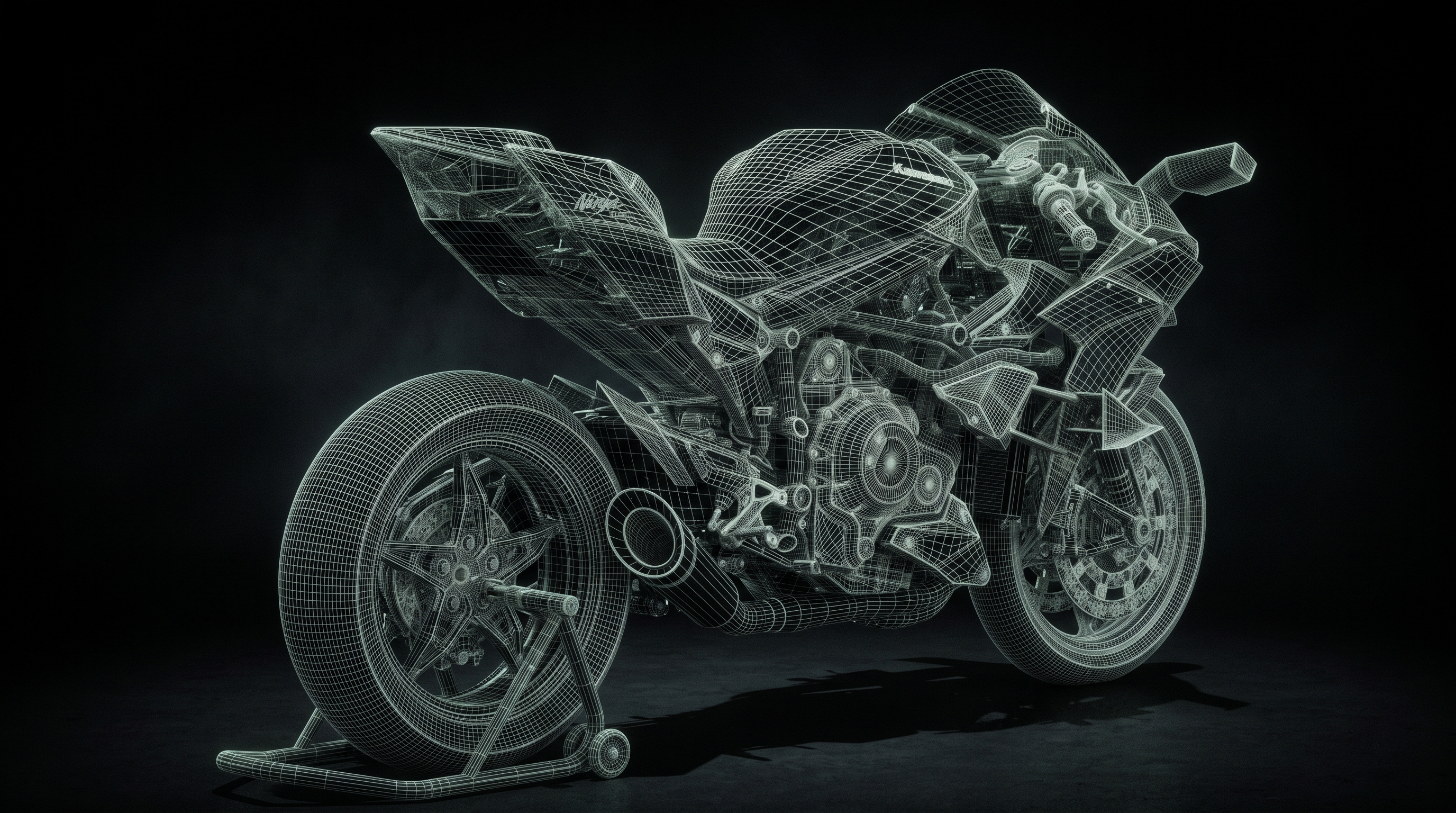
H2R pure wireframe H2R with wheels materialized H2R frame and engine H2R nearly complete H2R fully assembled
[01] REAR SLICK TIRE 190/650 R17, no tread
[02] TRELLIS FRAME High-strength steel
[03] EXHAUST SYSTEM Titanium, side exit
[04] BODYWORK Carbon fiber and aerodynamic wings
KAWASAKI NINJA H2R — DWG H2R-001 SCALE 1:12 · REV 05 · SHEET 01/01
STATE 00/04 — DIGITAL MESH STATE 01/04 — WHEELS & TIRES STATE 02/04 — TRELLIS FRAME STATE 03/04 — ENGINE & EXHAUST STATE 04/04 — FULL BODYWORK
Acelerando sob a luz da cidade Rastros de luz se intensificando ao redor da moto Rastros de luz extremos a toda velocidade

Ready for it?

The silence breaks. 310 horses wake.

Tunnel vision. Gravity is only a suggestion.

26 seconds. The limit does not exist.

Ninja H2R

Many dream. Few tame.

The Kawasaki Ninja H2R is a work of art built to order, restricted to the track. Strictly limited annual production.

Notice: Vehicle not homologated for public road use. Restricted to closed circuits.